
Core Matching Loop
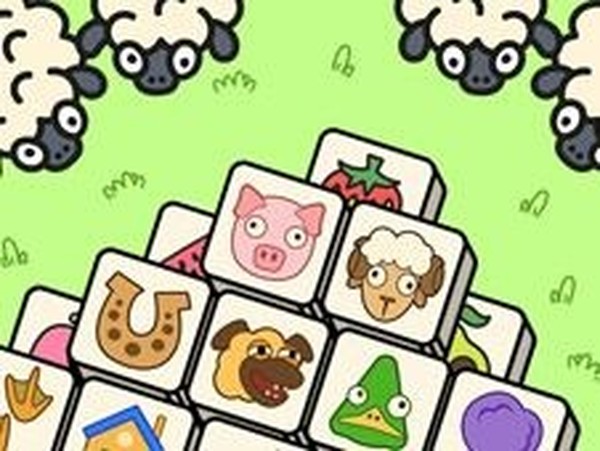
The central action revolves around selecting three tiles that show the same farm animal. Once chosen, these tiles slide to a holding area and vanish when a full trio is formed. The board is built from multiple layers, so some tiles are hidden beneath others. This design forces players to think about which matches to make first, as uncovering buried tiles often opens up new possibilities. The holding area has limited space, so careless picks can quickly block progress. Each level presents a fresh layout, ensuring the puzzle never feels repetitive.
Layered Board Design
Levels are constructed with stacked tiles that create a sense of depth. The topmost tiles are visible and accessible, while those underneath require strategic removal of covering pieces. This layered structure adds a spatial reasoning element to the matching mechanic. Early stages use simple arrangements with few layers, making them easy to scan. Later stages introduce denser stacks and more animal types, increasing the mental effort needed to plan a sequence of moves. The board design encourages players to look ahead and consider the consequences of each selection.
Star Rating System
Performance is measured by a star rating awarded at the end of each level. The rating depends on how quickly the board is cleared. Completing a level within a certain time threshold earns three stars, while slower finishes yield two or one. This system adds a light time-pressure element without making the game feel rushed. Players can replay levels to improve their rating, which extends the playtime and provides a clear goal for mastery. The star rating is separate from the core puzzle completion, so even a slow clear counts as a win.
Visual Style and Interface
The graphics use bright, friendly illustrations of farm animals such as sheep, pigs, and mice. Each animal is drawn with a soft, rounded style that feels approachable. The interface is kept simple, with large buttons and clear icons. There are no distracting animations or cluttered menus. The color palette uses warm earth tones and pastel accents, creating a calm atmosphere. This visual approach makes the game suitable for children while remaining pleasant for adults. The clean layout also helps players focus on the puzzle without visual noise.
Progression and Difficulty Curve
The game gradually introduces new challenges as players advance. Early levels serve as a tutorial, teaching the basic matching and clearing mechanics. Over time, the number of tiles on the board increases, and the layers become more complex. The holding area remains the same size, so efficient matching becomes more important. Some levels may include a higher variety of animal types, making it harder to find triples. The difficulty curve is smooth, giving players time to adapt before each new challenge. This progression keeps the game engaging without becoming frustrating.




Comments
0 comments