
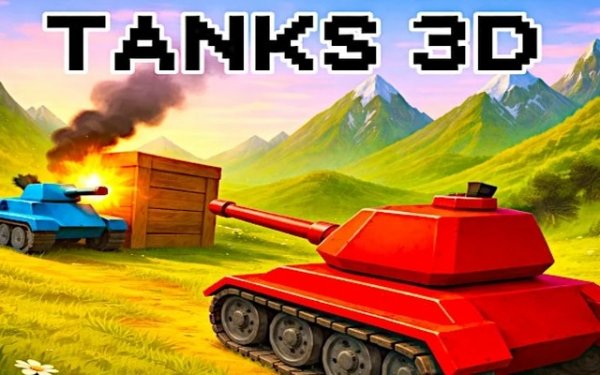
Destructible Arenas and Shifting Tactics
Armored Combat Zone 3D treats the arena as an active participant rather than a fixed stage. Each projectile impact reshapes the ground, carving new routes or raising barriers. A ridge that provided a clear firing line can collapse into a crater after a single exchange, forcing players to abandon prepared positions and rethink their approach mid-battle. Reading these terrain changes quickly is central to staying competitive.
Vehicle Handling and Firing Mechanics
Movement and aiming use standard keyboard and mouse controls, but the vehicle carries a deliberate weight. Sharp turns on broken ground risk exposing the chassis, so balancing speed against stability becomes a constant decision. The firing system adds further depth: players must lead moving targets and compensate for projectile drop, turning each shot into a calculation rather than a reflex.
Upgrades, Currency, and Vehicle Choice
Battles award in-game currency that funds permanent improvements such as faster reload times or stronger armor. Players can also unlock additional vehicle types, each with its own strengths and weaknesses. This creates a recurring trade-off between saving for a major upgrade and spending on smaller immediate gains, and it encourages experimenting with different chassis as arena conditions change.
Single-Player Structure and Map Awareness
The game is built exclusively for solo play, so every decision rests on the player rather than on teammates. AI opponents provide a consistent challenge that rewards learning from losses. Knowing each arena's layout matters as much as firepower: covered zones allow ambushes or broken sightlines, while open ground offers clear shots at the cost of exposure. Observing opponent patterns and predicting movement often decides an encounter more than raw damage output.








Editorial Notes