
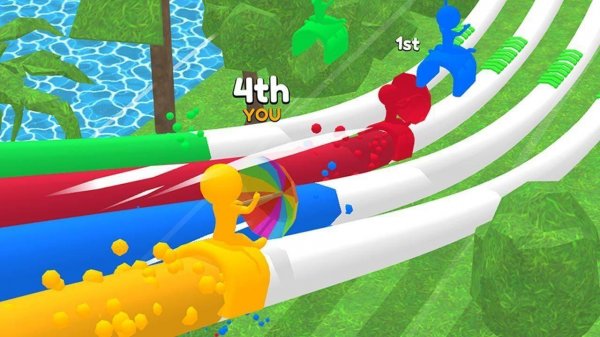
Core Racing Mechanics
In Wind Rider Arcade Rush, players guide a friendly character through vibrant courses by tilting an umbrella to catch wind currents. Tapping and holding on the screen angles the umbrella forward, building speed from natural airflows. Releasing triggers a jump, useful for clearing gaps or reaching elevated paths. The physics of each slope and breeze directly affect momentum, requiring players to read the terrain and adjust their approach on the fly.
Track Design and Variety
Each race unfolds on a fresh layout, with no two runs identical. Courses feature rolling hills, ramps, and open stretches where wind currents gather. The environment changes subtly between tracks, offering new challenges in timing and path selection. Players must learn the unique rhythm of each course to maintain speed and stay ahead of competitors.
Painting and Path Control
A standout feature is the track painting system. As players race, they leave a colorful trail behind them. Crossing over an opponent's trail paints over it, effectively claiming that section of the track. This adds a strategic layer: players can secure the fastest routes by overwriting rivals' marks, forcing them to take less optimal paths. Managing trail ownership becomes as important as raw speed.
Power-Ups and Boosts
Coins appear along the route and can be collected to activate temporary speed boosts. These bursts of acceleration help players close gaps or pull ahead during critical moments. Timing the use of boosts is key, as they provide only short windows of extra velocity. Coins are placed in positions that reward careful path selection and risk-taking.
Accessibility and Skill Growth
The controls are simple enough for newcomers to pick up quickly, yet the physics and strategic elements reward repeated play. Players can practice balancing taps and releases to maintain optimal speed while clearing obstacles. Learning each course's wind currents and slope angles leads to better momentum management. Over time, players develop a sense for when to jump, when to boost, and when to paint over an opponent's trail.




Comments
0 comments